

Mobile operating system
Mobile operating system
 A mobile operating system (or mobile OS) is an
operating system for smartphones, tablets, PDAs, or other mobile devices. While
computers such as the typical laptop are mobile, the operating systems usually
used on them are not considered mobile ones as they were originally designed
for bigger stationary desktop computers that historically did not have or need
specific "mobile" features. This distinction is getting blurred in
some newer operating systems that are hybrids made for both uses.
A mobile operating system (or mobile OS) is an
operating system for smartphones, tablets, PDAs, or other mobile devices. While
computers such as the typical laptop are mobile, the operating systems usually
used on them are not considered mobile ones as they were originally designed
for bigger stationary desktop computers that historically did not have or need
specific "mobile" features. This distinction is getting blurred in
some newer operating systems that are hybrids made for both uses.
Mobile operating systems combine features of a
personal computer operating system with other features useful for mobile or
handheld use; usually including, and most of the following considered essential
in modern mobile systems; a touchscreen, cellular, Bluetooth, Wi-Fi, GPS mobile
navigation, camera, video camera, speech recognition, voice recorder, music
player, near field communication and infrared blaster.
Mobile devices with mobile communications
capabilities (e.g. smartphones) contain two mobile operating systems – the main
user-facing software platform is supplemented by a second low-level proprietary
real-time operating system which operates the radio and other hardware.
Research has shown that these low-level systems may contain a range of security
vulnerabilities permitting malicious base stations to gain high levels of
control over the mobile device.
Android
Android (based on the Linux Kernel) is from Google
Inc.It has the largest installed base worldwide on smartphones. In fact it is
the most popular operating system for general purpose computers (a category
that includes, say, "desktop" Windows and "mobile"), while
Android is currently not popular regular ("desktop") PCs. Android is
free and open-source software, while most commonly in actual devices, a large
amount of proprietary software is bundled with it (such as Play Store, Google
Search, Google Play Services, Google Music, and so on) are proprietary,
licensed proprietary, closed source applications and contract (join the Open
Handset Alliance) not to manufacture cellulars that replace Google applications
or services.
Android's releases prior to 2.0 (1.0, 1.5, 1.6)
were used exclusively on mobile phones. Android 2.x releases were mostly used
for mobile phones but also some tablets. Android 3.0 was a tablet-oriented
release and does not officially run on mobile phones. The current Android
version is 5.0.
CyanogenMod
CyanogenMod is based on the open source Android
Open Source Project(AOSP), it is custom ROM that co-develop by CyanogenMod
community, therefore the OS does not include any proprietary apps unless the
user install it. Due to it open source nature, CyanogenMod allow Android users
which their device no longer gain update support from their manufacturer to
continue update their OS version to the latest one based on official release
from Google AOSP and heavy theme customization. The current version of the OS
is CyanogenMod 12 which is based on Android Lollipop.
Cyanogen OS
Same as it predecessor which is based on Google's
Android Open Source Project(AOSP), however it included proprietary apps and it
is only available for commercial uses. The current version of the OS is
Cyanogen OS 12 which is based on Android Lollipop.
Fire OS
Fire OS is an operating system launched by Amazon
which based on Google's Android Open Source
Project(AOSP). Currently only few devices are installed
with Fire OS, which is Fire Phone, Kindle Fire series and Amazon's Fire TV.
Although the OS was built on top on Google's AOSP, however it does not
pre-install Google apps and ship with custom Amazon services.
MIUI
MIUI has been developed by a Chinese electronic
company Xiaomi Tech, a partially closed source OS based on Google Android Open
Source Project(AOSP). MIUI is found in Xiaomi Smartphone such as the Mi and
Redmi Series, however it also has official support ROM for few Android devices.
Flyme OS
Flyme OS is develop by Meizu, an open source OS
based on Google Android Open Source Project(AOSP). Mostly, Flyme OS is
installed on Meizu Smartphones such as the MX's series, however it also has
official support ROM for few Android devices.
iOS
iOS (previously known as iPhone OS) is from Apple
Inc. It has the second largest installed base worldwide on smartphones, but the
largest profits, due to aggressive price competition between Android-based
manufacturers. It is closed source and proprietary and built on open source
Darwin core OS. The Apple iPhone, iPod Touch, iPad and second-generation Apple
TV all use iOS, which is derived from OS X.
Native third party applications were not
officially supported until the release of iOS 2.0 on July 11, 2008. Before
this, "jailbreaking" allowed third party applications to be
installed, and this method is still available.
Currently all iOS devices are developed by Apple
and manufactured by Foxconn or another of Apple's partners.
Windows Phone
Windows Phone is from Microsoft. It is closed
source and proprietary. It has third largest installed base on smartphones
behind Android and iOS.
On February 15, 2010, Microsoft unveiled its
next-generation mobile OS, Windows Phone. The new mobile OS includes a
completely new over-hauled UI inspired by Microsoft's "Metro Design
Language". It includes full integration of Microsoft services such as
OneDrive and Office, Xbox Music, Xbox Video, Xbox Live games and Bing, but also
integrates with many other non-Microsoft services such as Facebook and Google
accounts. Windows Phone devices are made primarily by Nokia, along with HTC,
Samsung.
As of 21 January 2015, Microsoft has announced
that the Windows Phone brand will be phased out and replaced with Windows 10
Mobile. It will primarily aim to bring tighter integration and unification with
its PC counterpart Windows 10, and provide a platform for both smartphones, and
small tablets under 8 inches in screen size.
By the end of 2014, Windows Phone global market
share was 2.7%.
BlackBerry
BlackBerry 10 (based on the QNX OS) is from
BlackBerry. As a smart phone OS, it is closed source and proprietary.
It is used mostly by government employees.
BlackBerry 10 is the next generation platform for BlackBerry smartphones and
tablets. All phones and tablets are manufactured by Blackberry itself.
Once one of the dominant platforms in the world,
its global market share has been reduced to 0.4% by the end of 2014.
Firefox OS
Firefox OS is from Mozilla. It is open source and
uses Mozilla Public License.
According to Ars Technica, "Mozilla says that
B2G is motivated by a desire to demonstrate that the standards-based open Web
has the potential to be a competitive alternative to the existing single-vendor
application development stacks offered by the dominant mobile operating
systems."
Sailfish OS
Sailfish OS is from Jolla. It is partly open
source and adopts GPL (core and middleware), however the user interface is
closed source.
After Nokia failed in 2011 with the MeeGo project
most of the MeeGo team have left Nokia, and established Jolla as a company to
use MeeGo and MER business opportunities. In 2012 Linux Sailfish OS based on
MeeGo and using MER core distribution has been launched for public use. The
first device, Jolla (mobile phone) was unveiled on 20 May 2013.
Tizen
Tizen is hosted by the Linux Foundation and
support from the Tizen Association, guided by a Technical Steering Group
composed of Intel and Samsung.
Tizen is an operating system for devices including
smartphones, tablets, in-vehicle infotainment (IVI) devices, and smart TVs. It
is an open source system(However the SDK was closed source and proprietary)
that aims to offer a consistent user experience across devices. Tizen's main
components are the Linux kernel and the WebKit runtime. According to Intel,
Tizen “combines the best of LiMo and MeeGo." HTML5apps are emphasized,
with MeeGo encouraging its members to transition to Tizen, stating that the
"future belongs to HTML5-based applications, outside of a relatively small
percentage of apps, and we are firmly convinced that our investment needs to
shift toward HTML5." Tizen will be targeted at a variety of platforms such
as handsets, touch pc, smart TVs and in-vehicle entertainment. On May 17, 2013,
Tizen released version 2.1, code-named Nectarine.
Ubuntu Touch OS
Ubuntu Touch OS is from Canonical Ltd.. It is open
source and uses the GPL license.
Discontinued software platforms
Symbian
The Symbian platform was developed by Nokia for
certain models of smartphones. It is proprietary software. The operating system
was discontinued in 2012, although a slimmed-down version for basic phones was
still developed until July 2014. Microsoft officially shelved the platform in
favor of Windows Phone after the acquisition of Nokia.
Windows Mobile
Windows Mobile is a discontinued operating system
from Microsoft that it replaced with Windows Phone. It is closed source and
proprietary.
The Windows CE operating system and Windows Mobile
middleware was widely spread in Asia (which mostly uses Android now). The two
improved variants of this operating system, Windows Mobile 6 Professional (for
touch screen devices) and Windows Mobile 6 Standard, were unveiled in February
2007. It was criticized for having a user interface which is not optimized for
touch input by fingers; instead, it is more usable with a stylus. However,
unlike iOS, it supports both touch screen and physical keyboard configurations.
Windows Mobile's market share sharply declined to
just 5% in Q2 of 2010. Microsoft phased out the Windows Mobile OS to focus on
Windows Phone.
Palm OS
Palm OS/Garnet OS was from Access Co. It is closed
source and proprietary. webOS was introduced by Palm in January 2009 as the
successor to Palm OS with Web 2.0 technologies, open architecture and
multitasking capabilities.
webOS
webOS was from LG, although some parts are open
source. webOS is a proprietary mobile operating system running on the Linux
kernel, initially developed by Palm, which launched with the Palm Pre. After
being acquired by HP, two phones (the Veer and the Pre 3) and a tablet (the
TouchPad) running webOS were introduced in 2011. On August 18, 2011, HP
announced that webOS hardware was to be discontinue but would continue to
support and update webOS software and develop the webOS ecosystem. HP released
webOS as open source under the name Open webOS, and plans to update it with
additional features. On February 25, 2013 HP announced the sale of WebOS to LG
Electronics, who planned to use the operating system for its "smart"
or Internet-connected TVs. However HP retained patents underlying WebOS as well
as cloud-based services such as the App Catalog.
Maemo
Maemo was a platform developed by Nokia for
smartphones and Internet tablets. It is open source and GPL, based on Debian
GNU/Linux and draws much of its GUI,frameworks and libraries from the GNOME
project. It uses the Matchbox window manager and the GTK-based Hildon as its
GUI and application framework.
MeeGo
MeeGo was from non-profit organization The Linux
Foundation. It is open source and GPL. At the 2010 Mobile World Congress in
Barcelona, Nokia and Intel both unveiled 'MeeGo', a mobile operating system
that combined Moblin and Maemo to create an open-sourced experience for users
across all devices. In 2011 Nokia announced that it would no longer pursue
MeeGo in favor of Windows Phone. Nokia announced the Nokia N9 on June 21, 2011
at the Nokia Connection event in Singapore. LG announced its support for the
platform.
LiMo
LiMo was from the LiMo Foundation. LiMo Foundation
launched LiMo 4 on February 14, 2011. LiMo 4 delivers middleware and
application functionality, including a flexible user interface, extended widget
libraries, 3D window effects, advanced multimedia, social networking and
location-based service frameworks, sensor frameworks, multi-tasking and
multi-touch capabilities. In addition, support for scalable screen resolution
and consistent APIs means that the platform can deliver a consistent user
experience across multiple device types and form factors.
THE EVOLUTION OF SMART PHONE
Forerunner
 The first mobile phone to incorporate PDA features was an IBM prototype developed in 1992 and demonstrated that year at the COMDEX computer industry trade show. A refined version of the product was marketed to consumers in 1994 by BellSouth under the name Simon Personal Communicator. The Simon was the first cellular device that can be properly referred to as a "smartphone", although it was not called that in 1994. In addition to its ability to make and receive cellular phone calls, Simon was able to send and receive faxes and emails and included several other apps like address book, calendar, appointment scheduler, calculator, world time clock, and note pad through its touch screen display. Simon is the first smartphone to be incorporated with the features of a PDA.
The term "smart phone" first appeared in print in 1995, for describing AT&T's "PhoneWriter Communicator" as a "smart phone".
PDAs
Personal digital assistantIn the late 1990s, many mobile phone users carried a separate dedicated PDA device, running early versions of operating systems such as Palm OS, BlackBerry OS or Windows CE/Pocket PC.[1] These operating systems would later evolve into mobile operating systems.
 In March 1996, Hewlett-Packard released the OmniGo 700LX, which was a modified 200LX PDA that supported a Nokia 2110-compatible phone and had integrated software built in ROM to support it. The device featured a 640x200 resolution CGA compatible 4-shade gray-scale LCD screen and could be used to make and receive calls, text messages, emails and faxes. It was also 100% DOS 5.0 compatible, allowing it to run thousands of existing software titles including early versions of Windows.
In August 1996, Nokia released the Nokia 9000 Communicator which combined a PDA based on the GEOS V3.0 operating system from Geoworks with a digital cellular phone based on the Nokia 2110. The two devices were fixed together via a hinge in what became known as a clamshell design. When opened, the display was on the inside top surface and with a physical QWERTY keyboard on the bottom. The personal organizer provided e-mail, calendar, address book, calculator and notebook with text-based web browsing, and the ability to send and receive faxes. When the personal organizer was closed, it could be used as a digital cellular phone.
In June 1999, Qualcomm released a "CDMA Digital PCS Smartphone" with integrated Palm PDA and Internet connectivity, known as the "pdQ Smartphone"
In early 2000, the Ericsson R380 was released by Ericsson Mobile Communications,and was the first device marketed as a "smartphone". It combined the functions of a mobile phone and a PDA, supported limited web browsing with a resistive touchscreen utilizing a stylus.
In early 2001, Palm, Inc. introduced the Kyocera 6035, which combined a PDA with a mobile phone and operated on Verizon. It also supported limited web browsing.
Smartphones before Android, iOS and BlackBerry, typically ran on Symbian, which was originally developed by Psion. It was the world's most widely used smartphone operating system until the last quarter of 2010.
Mass adoption
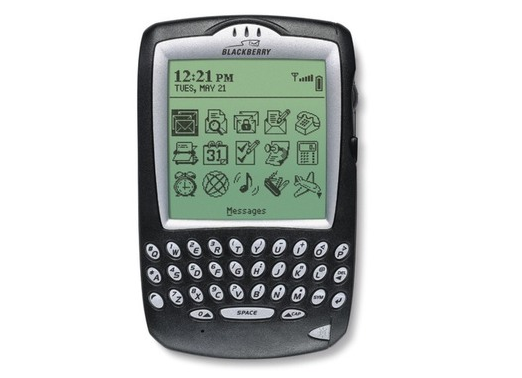 In 1999, the Japanese firm NTT DoCoMo released the first smartphones to achieve mass adoption within a country. These phones ran on i-mode, which provided data transmission speeds up to 9.6 kbit/s.Unlike future generations of wireless services, NTT DoCoMo's i-mode used cHTML, a language which restricted some aspects of traditional HTML in favor of increasing data speed for the devices. Limited functionality, small screens and limited bandwidth allowed for phones to use the slower data speeds available.
The rise of i-mode helped NTT DoCoMo accumulate an estimated 40 million subscribers by the end of 2001. It was also ranked first in market capitalization in Japan and second globally. This power would wane in the face of the rise of 3G and new phones with advanced wireless network capabilities.
Outside of Japan smartphones were still rare, although throughout the mid-2000s, devices based on Microsoft's Windows Mobile started to gain popularity among business users in the U.S. The BlackBerry later gained mass adoption in the U.S., and American users popularized the term "CrackBerry" in 2006 due to its addictive nature. The company first released its GSM BlackBerry 6210, BlackBerry 6220, and BlackBerry 6230 devices in 2003.
Symbian was the most popular smartphone OS in Europe during the middle to late 2000s. Initially, Nokia's Symbian devices were focused on business, similar to Windows Mobile and BlackBerry devices at the time. From 2006 onwards, Nokia started producing entertainment-focused smartphones, popularized by the Nseries. In Asia, with the exception of Japan, the trend was similar to that of Europe.
Android and iOS
 In 2007, Apple Inc. introduced the iPhone, one of the first smartphones to use a multi-touch interface. The iPhone was notable for its use of a large touchscreen for direct finger input as its main means of interaction, instead of a stylus, keyboard, or keypad typical for smartphones at the time.
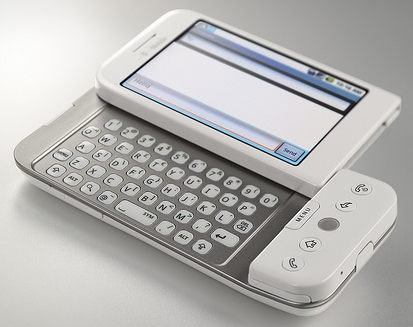 2008 saw the release of the first phone to use Android called the HTC Dream (also known as the T-Mobile G1). Android is an open-source platform founded by Andy Rubin and now owned by Google. Although Android's adoption was relatively slow at first, it started to gain widespread popularity in 2010, and now dominates the market.
These new platforms led to the decline of earlier ones. Microsoft, for instance, started a new OS from scratch, called Windows Phone. Nokia abandoned Symbian and partnered with MS to use Windows Phone on its smartphones. Windows Phone then became the third-most-popular OS. Palm's webOS was bought by Hewlett-Packard and later sold to LG Electronics for use on LG smart TVs. BlackBerry Limited, formerly known as Research In Motion, also made a new platform from scratch, BlackBerry 10.
The capacitive touchscreen also had a knock-on effect on smartphone form factors. Before 2007 it was common for devices to have a physical numeric keypad or physical QWERTY keyboard in either a candybar or sliding form factor. However, by 2010, there were no top-selling smartphones with physical keypads.
THE EVOLUTION OF CELL PHONE DESIGN BETWEEN 1983-2009
Cell phones have evolved immensely since 1983, both in design and function.
From the Motorola DynaTAC, that power symbol that Michael Douglas wielded so forcefully in the movie “Wall Street”, to the iPhone 3G, which can take a picture, play a video, or run one of the thousands applications available from the Apple Store.
There are thousands of models of cell phones that have hit the streets between 1983 and now.
We’ve picked a few of the more popular and unusual ones to take you through the history of this device that most of us consider a part of our everyday lives.
We have tried, wherever possible, to include the most popular phones and the phones that were “firsts” for a particular feature, but may have missed out on your favorite phones due to the sheer number of models that are out there.
We invite you to post your faves in the comments section if they are not listed here.
Mobile phones are just now beginning to be as vital to North Americans as they have been to Asians. You can always see what is coming to store shelves in the next six months to a year by looking at the models that are currently available in Japan.
North America also had a spotty 3G network that has only really been revamped recently in order to deal with increasing demands for faster loading speeds from mobile customers, whereas Asia and most of Europe have had proper 3G networks in place for some time.
This has led to a revolution in 3G phones from 2007 until now, with more due to come out in 2009.
The list does not include any phones that were not portable handhelds. Car phones and some handhelds that were the size of a small briefcase were in use in the 1970’s and 1980’s, but since this is more about design than function we chose not to include them here.
1983
Motorola DynaTAC 8000X
Analog Motorola DynaTAC 8000X Advanced Mobile Phone System mobile phone as of 1983.

1989
Motorola MicroTAC 9800X
The first truly portable phone. Up until its release, most cellular phones were installed as car phones due to the inability to fit them into a jacket pocket.

1992
Motorola International 3200
The first digital hand-size mobile telephone.

Nokia 1011
This was the first mass-produced GSM phone. It was produced until 1994.

1993
BellSouth/IBM Simon Personal Communicator
The IBM Simon was the first PDA/Phone combo.

1996
Motorola StarTAC
The first clamshell cellular phone. Also one of the first display screens featured on a cell.

Nokia 8110
Alternately called the “banana phone”, this phone was popularized in the first Matrix movie.

Nokia 9000 Communicator
The first smartphone series, driven by an Intel 386 CPU.

1998
Nokia 9110i
This iteration of Nokia’s Communicator series significantly reduced the weight of this precursor to the smartphone.

Nokia 5110
This cell phone was the most popular consumer model at the time of its release and for some time afterwards.

1999
Nokia 8210
This phone was loved for its customizable design, but hated for its screen fade.

Nokia 7110
The first mobile phone with a WAP browser.

Nokia 5210
This phone was known for its durability and splash-proof interchangeable casing.

BENEFON ESC!
This was the first instance of a GPS being integrated into a mobile phone, and was sold mostly in Europe.

Samsung SPH-M100 Uproar
The Uproar was the first cell phone to have MP3 music capabilities.

Nokia 3210
The internal antenna and predictive T9 text messaging sold approximately 160 million of these phones.

2000
Ericsson R380
The R380 featured a black and white touchscreen, partially covered by a flip.

Nokia 3310
This popular phone sold 126 million models, and was particularly popular in Europe.

Ericsson R320
One of the first phones with a WAP browser. A version of this phone was released in China that allowed Chinese character SMS.

2001
Nokia 5510
This phone featured a full QWERTY keyboard. It could also store up to 64mb of music.

Nokia 8310
This phone contained premium features not normally found on handsets of the time, such as Infrared, a fully functional calendar and a FM Radio.

Ericsson T39
This tiny handset was the first Bluetooth-capable phone.

Ericsson T66
This diminutive entry from Ericsson was the height of a cigarette.

Ericsson T68
This was Ericsson’s first handset with a colour screen.

Siemens S45
Siemens’s first ever GPRS mobile phone with 360kb of internal memory – high at the time.

2002
Nokia 3510(i)
The first Nokia phone to bring GPRS internet services to the mass market. The 3510i, pictured here, was a more advanced version with a colour screen.

Nokia 7650
This was the first Nokia set to feature a built-in camera and was featured in the movie Minority Report.

Sony Ericsson P800
This smartphone featured a touchscreen and up to 128mb of memory.

Nokia 6100
This model sold from 2002-2005. It featured an LCD screen and internet connectivity through GPRS.

Nokia 6310i
The 6310i quickly gained popularity in the corporate world for its simplicity and long battery life.

Sanyo SCP-5300
The first camera phone. Despite the low quality images it produced, it was the first.

2003
Nokia 1100
This extremely popular design has sold over 200 million since its introduction in 2003. This phone is rumoured to have sold for up to $32,000 in online criminal communities due to its ability to intercept one-time banking passwords.

Nokia N-Gage
Nokia’s answer to the Game Boy advance, this phone/games system had a couple of award winning titles before it succumbed to its clunky interface design.

PalmOne Treo 600
One of the “it” gadgets from 2003-2004 until BlackBerries overtook them in popularity. Three or four days between charges and a successful merger of phone, PDA, and camera made this the business tool of choice.

Nokia 2100
This design was available in a wide range of colours and featured a monochromatic screen.

Nokia 6600
Considered very advanced at the time of its introduction due to its Symbian OS-based Nokia Series 60 platform. Released in the US market as the Nokia 6620.

BlackBerry Quark 6210
Research In Motion’s first integrated phone/PDA.

BlackBerry 7210
BlackBerry’s first colour screen.

Nokia 7600
One of the first 3G smartphones by Nokia, still one of the lightest and smallest.

2004
Motorola Razor V3
When this was introduced it set the standard for sleek design in the industry.

Sony Ericsson P910
An attractive flip smartphone with full internet connectivity.

Nokia 7610
Nokia’s first smartphone with a 1 megapixel camera.

Nokia 3220
The first entry-level Nokia phone that offered full internet access.

Nokia 6630
The first cell phone to allow for global roaming.

Nokia 7280
Listed by Fortune Magazine as one of the best products of 2004. Also referred to as the “lipstick” phone.

2005
Nokia 1110
Released as a low-end GSM phone, and widely used in developing countries.

Nokia 6680
One of the first 3G phones, the Nokia 6680 was considered to be high end at the time of its release.

HTC Universal
This was the first 3G Pocket PC phone at HTC and the first to come with Windows Mobile.

Motorola RAZR V3 Magenta
This hot pink phone gave the fashion set something to talk about – and on.

2006
HTC TyTN 100
This model was sold as the Orange SPV M3100 in the UK, keeping with HTC’s tradition of private labelling for individual carriers.

NOKIA N73
This immensely popular smartphone has sold millions of models worldwide, and is still in wide use as of 2009.

Motorola Q
The “BlackBerry Killer” from Motorola.

BlackBerry Pearl
The first design-conscious entry from RIM, the Pearl is still being offered on the market today.

KDDI Penck
A fabulous design available only in Japan.

O2 XDA Flame
The XDA Flame is the first dual processor PDA-phone in the 02 line.

LG Chocolate KG800
One of the first well-designed phones made for mass market use.

Samsung i607 BlackJack
Research in Motion sued Samsung over the name of this phone. The lawsuit was settled out of court.

Nokia E62
Originally released to target business users in the European market.

2007
iPhone
The original iPhone was released in June 2007 with an auto-rotate sensor, a multi-touch sensor that allowed multiple inputs while ignoring minor touches, a touch interface that replaced the traditional QWERTY keyboards, and many other features that helped to give Apple an almost instant healthy market share on its release.

LG Prada KE850
Touchscreen phone that took home a Red Dot Design Award for “Best of the Best” in 2007.

LG Voyager
This design was touted as LG’s take on the iPhone.

HTC Touch
HTC’s answer to the iPhone with its own multi-touch interface and a high screen resolution.

Motorola RAZR2 V9
The solid steel hinge and the metal case make this sleek design feel luxurious and durable.

Motorola Q9H
This fine-tuning of the Motorola Q was released in Italy and the US in 2007.

Nokia E90 Communicator
This update of the first smartphone launched the fifth generation of the series.

Nokia N95
Nokia’s popular smartphone features a slider to access multimedia buttons and a numeric keypad.

Helio Ocean
Work on this “ultimate messaging and talking machine” began before Helio was a company.

LG Shine
This phone won another Red Dot for LG in 2007. Also released in Gold and Titanium Black.

Motorola RAZR2
This phone features the Opera internet browser and CrystalTalk technology.

Palm Treo 755p
The Treo 755p is a smartphone developed by Palm, Inc. It was released on May 14, 2007 as the first CDMA Treo without an aerial antenna.

LG Viewty
A phone firmly focused on visuals. DivX Certified playback and 5 megapixel digital camera with Schneider Kreuznach optics are just a couple of the features of this simply designed phone.

2008
iPhone 3G
The iPhone 3G was made even more desirable by all the apps that could be purchased for it in the AppStore when it was released in July of 2008.

LG Vu
The LG Vu was one in a series of phones that included the LG Prada phone.

T-Mobile G1 Phone
The G1 phone was the first phone to be released with the Android operating system designed by Google. Also known as the HTC Dream. One million devices have sold as of April 2009.

Nokia N96
This GPS-enabled entry in Nokia’s smartphone line features a sleek, compact design.

Nokia 5800 XpressMusic
This phone was featured in The Dark Knight.

LG Secret
The outside of the LG Secret, a 3G slider phone, is constructed from carbon fiber. Also features the world’s slimmest 5.0 megapixel camera on a smartphone.

Samsung Instinct
The Instinct was introduced as the “iPhone killer” from Samsung at a low price of $129.00.

BlackBerry Storm
Designed to be a direct competitor to the iPhone 3G and other 3G smartphones; RIM’s first device to do away with the QWERTY keyboard and incorporate a touchscreen.

BlackBerry Bold
Blackberry’s “middle ground” solution for those who wanted a 3G phone and a QWERTY keyboard.

Samsung Behold
Cell Fanatic found this entry by Samsung offered superior image quality over the Apple iPhone 3G and the BlackBerry Storm.

Samsung Gravity
The Samsung Gravity is their first to feature a slide-out keyboard that has proved popular in other brands.

Motorola Krave
The Krave design features a transparent flip that acts as a secondary touch surface to access additional features.

Samsung Omnia
The Samsung Omnia features a simple touchscreen interface and a speaker on the back.

Nokia E63
Billed as the budget business smartphone.

LG Dare
The handwriting recognition and simple touchscreen styling of the Dare is enhanced by the easy-grip back.

Sony Ericsson W760i
Includes the “Sensme” music feature, as well as all of the other features from the Walkman phone brand.

Nokia N79
The Nokia N79 has a Naviwheel, GPS, a 5 megapixel camera with a Carl Zeiss Optics Tessar lens and more.

HTC Touch Diamond
This attractive smartphone featured a resistive touch screen which is better for Asian character recognition.

LG KC910 Renoir
The LG Renoir has an 8-megapixel camera with xenon flash and Schneider-Kreuznach optics.

Nokia E71
The steel frame of this sleek smartphone from Nokia fits into your palm.

2009
Prada II or LG KF900
The second iteration of the Prada phone designed by LG. The sliding QWERTY keyboard is new, as is its 3G capability.

LG Arena
The first phone with LG’s 3D S-Class user interface. This UI reorients with the rotation of the phone and allows you to scroll film-reel style through available apps.

BlackBerry Curve 8900
Released in February 2009, the Curve features an improved trackball and a higher resolution screen. Still a 2G.

LG Versa
Comes with an attachable QWERTY keyboard and a virtual keyboard on the touch screen.

Sidekick LX 2009
This 3G incarnation of the Sidekick includes improved support for social networking applications.

Samsung Magnet
The Samsung Magnet is a cheap alternative for pricier smartphones with much of the same functionality and a cool design.

LG Xenon
Another slide-out QWERTY keyboard and compact design. Comes with AT&T’s Navigator, AT&T’s turn-by-turn GPS service.

HTC Magic
The next HTC entry to sport Google’s Android operating system. No US carriers have yet been confirmed for this model, but T-Mobile has been rumoured to be the carrier of record. Vodafone has exclusive rights to the phone in all markets that they service.

HTC Touch Diamond2
HTC made the LCD display screen as large as they could at 3.2″ for their next incarnation of the Diamond.

Samsung Propel Pro
The sliding QWERTY keyboard and slick design make this an attractive entry by Samsung.

LG Rumor2
Built for e-mail, the Rumor2 supports Lotus Notes where its predecessor didn’t.

Motorola Renew
This eco-friendly phone is the world’s first carbon-neutral cell phone. Made with recycled water bottles, cheap, and an abundance of features for the low price.

COMING SOON
Palm Pre
This phone launches June 6 in the US through Sprint. It will feature the ability to keep multiple apps open at once.

Nokia N97
This phone will be available in June of 2009.

Omnia HD/Samsung i8910
This phone promises the first high-definition video recording when it is released July 1st of 2009.

ONLY AVAILABLE IN JAPAN
Here’s hoping that some of these sleek designs make it across the pond eventually to North America. For more Japanese tech goodness, check KDDI’s English page.
Hitachi WOOO Ketai H001 Phone
This phone promises a 3D display. Ubergizmo predicts that it will be a Japan-only handset.

Panasonic P001
3.1″ increased resolution screen, impressive design, global roaming capabilities and one-push open make this an object of desire.

Walkman Phone Premier3
This phone opens up to reveal a 3″ screen and a stylish keypad.

Casio 001
This sports model features a touch panel for interactive gaming and music.

S001 Sony Ericsson Cyber-Shot
This phone screams elegance. Oh, and it has the world’s first 3.3″ full OLED WVGA display and an 8.1 megapixel camera. Not that we’d want all that fancy stuff in North America.

Toshiba T001
Princesses and fashionistas everywhere will go gaga over this design. Advanced video functions and a 5.1 megapixel camera put a little spike in this phone’s heel.

Kyocera K001 Junior Phone
Those of you with children will know how hard it is to put parental restrictions on anything electronic. This phone gives you the ability to track your child with a GPS locator, lock out questionable website addresses, and more.

สมัครสมาชิก:
ความคิดเห็น (Atom)